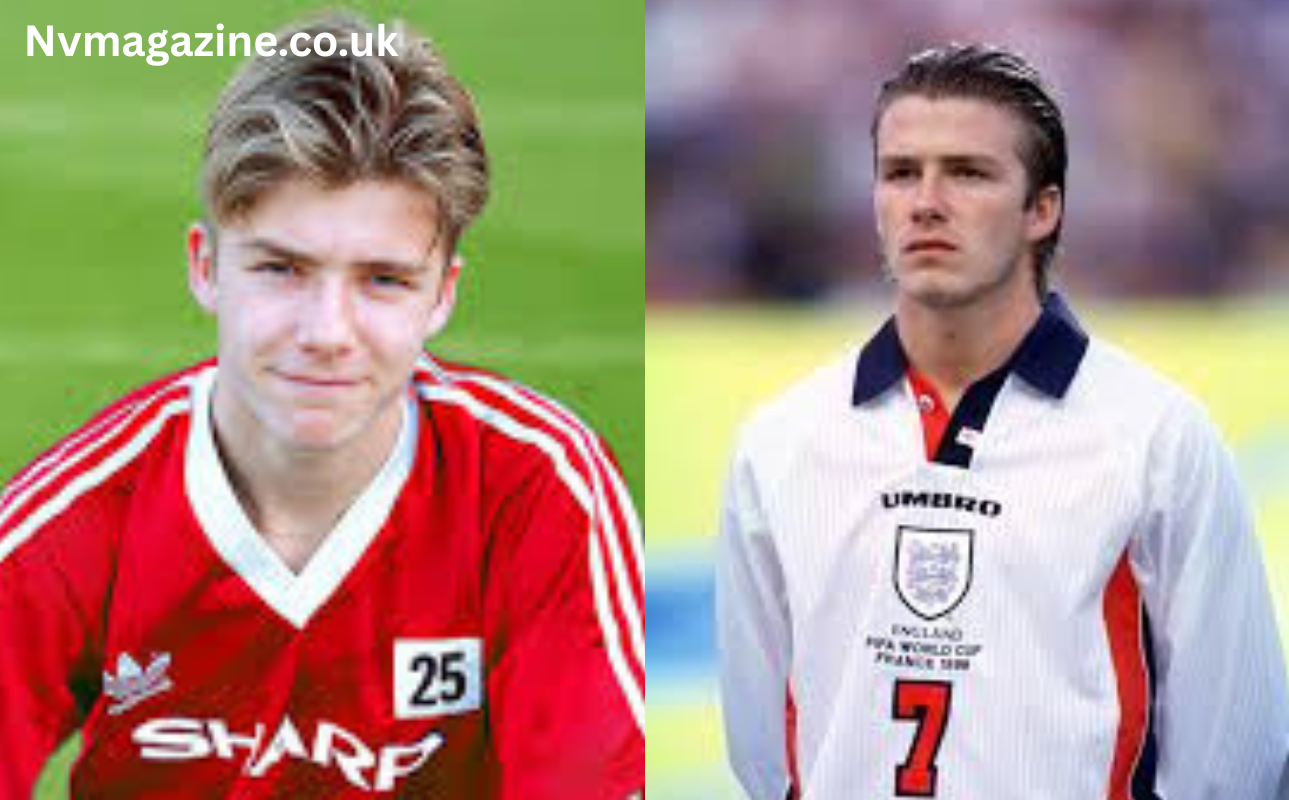
Before the world knew him as a football superstar, fashion icon, and international celebrity, David Beckham was simply a young boy from East London with a dream bigger than most people around him could imagine. He did not dream of fame, luxury, or magazine covers—he dreamed of football. More specifically, he dreamed of wearing the red shirt of Manchester United and playing at Old Trafford.
Table of Contents
ToggleYoung David Beckham was not the loudest child in the room, nor was he the biggest player on the pitch. What made him different was his discipline. While other children played for fun, Beckham practiced with purpose. He repeated crosses, passes, and free kicks again and again until they became second nature. His obsession with perfection started early, and it became the foundation of one of football’s greatest careers.
His story is powerful because it proves that greatness often starts in ordinary places. From public parks in London to the biggest stadiums in the world, Beckham’s journey shows how focus, resilience, and family support can turn childhood ambition into global success. Understanding “David Beckham young” means understanding how legends are built long before the spotlight arrives.
David Beckham Quick Facts Table
| Full Name | David Robert Joseph Beckham |
|---|---|
| Popular Name | David Beckham |
| Date of Birth | 2 May 1975 |
| Age | 50 Years (as of 2026) |
| Birthplace | Leytonstone, London, England |
| Nationality | British |
| Profession | Former Professional Footballer, Entrepreneur, Sports Executive |
| Position | Midfielder (Right Midfield) |
| Father | David Edward Alan “Ted” Beckham |
| Mother | Sandra Georgina Beckham |
| Siblings | Lynne Georgina Beckham, Joanne Louise Beckham |
| Spouse | Victoria Beckham |
| Children | Brooklyn, Romeo, Cruz, Harper |
| Education | Chingford County High School |
| Famous For | Manchester United, England Captaincy, Free-Kick Specialist |
| Net Worth | Estimated $450–500+ Million |
| @davidbeckham | |
| X (Twitter) | @davidbeckham |
| Current Role | President and Co-owner of Inter Miami CF |
Early Life and Childhood
David Robert Joseph Beckham was born on 2 May 1975 in Leytonstone, London, England. He was raised in a hardworking family where discipline, routine, and football were all part of everyday life. His father, Ted Beckham, worked as a kitchen fitter, while his mother, Sandra, worked as a hairdresser. Their home was not filled with luxury, but it was filled with love, ambition, and strong family values. Beckham’s parents were deeply committed to giving their children support and stability.
Football was not just entertainment in the Beckham household—it was almost a family tradition. His parents were passionate supporters of Manchester United and often traveled long distances from London to Manchester just to watch matches at Old Trafford. That loyalty deeply influenced young David. He grew up watching the club, admiring players like Bobby Charlton, and imagining himself one day wearing the same famous shirt. His middle name, Robert, was even chosen in honor of Bobby Charlton.
As a child, Beckham was focused and unusually serious about football. He was not casually interested—he was fully committed. He played for local youth side Ridgeway Rovers, where his father also helped coach. Even at that age, coaches noticed that he trained differently. He practiced with purpose, stayed longer than others, and seemed to believe his future had already been decided. Football was never a hobby for him—it was his life plan.
Education and School Life
David Beckham attended Chingford County High School in London, but from the beginning, it was clear that school would never be the center of his ambitions. Like many children, he was asked by teachers what he wanted to become when he grew up. Unlike most children, his answer never changed. He always said the same thing: “I want to be a footballer.” Even when adults pushed him to consider something more “realistic,” he stayed firm in that dream.
This clarity of purpose was rare. Many young athletes struggle because they divide attention between different goals, but Beckham’s focus was absolute. He respected education, but football was where his heart lived. His parents recognized that passion and chose to support it instead of dismissing it. That encouragement became one of the strongest pillars in his development. They believed in his dream before the world ever did.
He also attended one of Bobby Charlton’s football schools and won a talent competition that gave him the chance to train with FC Barcelona. Experiences like these made his dream feel more real. Instead of imagining professional football from a distance, he began seeing it up close. Every opportunity strengthened his belief that he belonged at the highest level.
Family Background and Values
The Beckham family played a major role in shaping David’s personality. He grew up with two sisters, Lynne and Joanne, in a close-knit household where loyalty and hard work were expected. His parents were not wealthy, but they taught him the value of discipline, respect, and consistency. These qualities stayed with him long after he became famous.
His father was especially influential in his football journey. Ted Beckham coached youth football and spent countless hours helping David improve. From local training sessions to youth tournaments, he was present at every important step. This was not pressure—it was partnership. Young David felt supported, not forced, and that healthy balance helped him develop confidence without losing humility.
His mother also played an important role by providing emotional stability and encouragement. She helped maintain normal family life even as David’s football talent began attracting serious attention. Fame came later, but the foundation of responsibility and grounded values was built at home. Many people see Beckham as polished and professional, and much of that began with the structure of his early family life.
Joining Manchester United Academy
For young Beckham, signing with Manchester United was not just a career step—it was the fulfillment of the dream he had carried since childhood. He signed schoolboy forms with the club on his 14th birthday and later joined their Youth Training Scheme in 1991. This moment changed everything because it placed him inside the club he had loved his entire life.
Life at the academy was demanding. Competition was intense, and every player was fighting for a professional future. Beckham was surrounded by talented young footballers, including players who would later become part of the famous “Class of ’92.” This group included names like Ryan Giggs, Paul Scholes, and Gary Neville.
What separated Beckham was not physical power, but precision. His crossing, passing, and dead-ball technique were exceptional. He practiced these skills constantly. Coaches trusted him because he was reliable and disciplined. He understood early that consistency creates opportunity, and that mindset helped him survive one of the toughest youth systems in football.
Breakthrough Into Professional Football
David Beckham made his first-team debut for Manchester United in 1992 at just 17 years old. It was the first visible step of a journey that had started years earlier on local football pitches. While the debut itself was important, the real challenge was staying there. Professional football demanded mental strength as much as talent.
One of his most famous early moments came in 1996 when he scored an unforgettable goal from the halfway line against Wimbledon. That goal instantly grabbed headlines and introduced Beckham to a global audience. It was bold, confident, and technically brilliant—the perfect symbol of the player he was becoming.
Under legendary manager Sir Alex Ferguson, Beckham developed into one of the most reliable midfielders in English football. His work ethic matched Ferguson’s standards, and that trust allowed him to become a key part of one of the strongest squads in Europe. His rise was no accident—it was years of preparation finally meeting opportunity.
The Treble Season and Global Fame
The 1998–99 season changed Beckham’s life forever. Manchester United won the historic treble: the Premier League, FA Cup, and UEFA Champions League. Beckham played a central role in that achievement, especially with his creativity, crosses, and set-piece brilliance.
This was the season that transformed him from a football star into a global icon. His performances were elite, but so was his visibility outside football. His hairstyle, fashion sense, confidence, and high-profile public image made him one of the most talked-about athletes in the world. He became recognizable even to people who did not watch football.
Yet behind the fame, the same disciplined young player remained. Beckham never relied only on celebrity status. He continued to train with the same seriousness that defined his youth. That balance between image and performance helped him survive a level of attention that destroys many athletes.
England Career and Captaincy
Playing for the England national football team brought enormous pride but also heavy pressure. Beckham’s international career included both painful criticism and unforgettable redemption. After the 1998 World Cup controversy, he became one of the most criticized players in England.
Many expected him to struggle under that pressure, but he responded with resilience. Instead of hiding, he worked harder. His legendary free-kick against Greece in 2001, which secured England’s place in the 2002 World Cup, became one of the greatest moments of his career. It changed public opinion and restored him as a national hero.
He later became captain of England and led the team with maturity and calm leadership. This period showed a different side of Beckham—not just the stylish star, but the emotionally strong professional who could recover from public failure and return stronger. That resilience became one of the most respected parts of his legacy.
Personal Life and Marriage
David Beckham’s personal life became global news when he began dating Victoria Beckham, famously known from the Spice Girls. Their relationship quickly became one of the most famous celebrity partnerships in the world. Together, they became known as a modern power couple who combined sport, fashion, and entertainment.
Their marriage attracted enormous media attention, but family remained central to Beckham’s identity. They built a life together and raised four children: Brooklyn, Romeo, Cruz, and Harper. Despite constant public attention, Beckham often speaks about fatherhood as one of the most meaningful parts of his life.
His personal image evolved over time. In his younger years, many people focused only on his fame and celebrity lifestyle. As he matured, people saw more clearly the discipline, loyalty, and family values underneath that public image. His close relationship with his children and wife helped strengthen that respect.
Net Worth and Business Success
David Beckham’s estimated net worth is believed to be between $450 million and $500+ million, making him one of the wealthiest former footballers in the world. While football salaries built the foundation, his true financial strength came from long-term brand strategy and smart business decisions.
He earned major salaries from clubs like Real Madrid CF, LA Galaxy, AC Milan, and Paris Saint-Germain F.C.. However, endorsements with brands like Adidas turned him into a business empire. His lifetime Adidas deal became one of the most famous athlete sponsorships in sports history.
Today, his role as president and co-owner of Inter Miami CF shows that he successfully transitioned from player to football executive. He understood early that a career in sport is temporary, but smart planning can create lifelong financial security and influence.
Social Media Presence and Modern Influence
Even after retirement, Beckham remains one of the most visible and influential sports figures online. His Instagram account gives fans a mix of family life, charity work, football leadership, and major brand campaigns. Unlike many celebrities, his online presence feels carefully balanced between personal warmth and professional branding.
Young audiences know him not only for football highlights but also for fashion, business, and philanthropy. Older fans remember the unforgettable free kicks and trophies. This rare cross-generational appeal makes him one of the strongest personal brands in world sport.
He also uses his platform for charitable work and global campaigns. His influence today is not measured only by trophies, but by the way he continues shaping football culture and inspiring younger athletes. Retirement did not reduce his relevance—it simply changed the form of his leadership.
Recent Life and Future Goals
In recent years, Beckham has focused heavily on building Inter Miami CF into a major football institution. His long-term dream of creating a successful American football club became reality, and in 2026 he publicly reflected on that journey by saying dreams truly can come true as the club reached major success.
He is also deeply involved in ambassador work, youth development projects, and humanitarian efforts. His focus has shifted from personal trophies to creating opportunities for others. This stage of life reflects maturity and purpose beyond fame.
Looking ahead, Beckham’s legacy is becoming bigger than football statistics. He is building institutions, mentoring future generations, and helping shape the sport globally. His future is no longer about proving himself—it is about creating something lasting for others.
Conclusion
The story of young David Beckham is powerful because it reminds us that success begins long before the applause. Before the trophies, before the headlines, and before global fame, there was simply a boy in London practicing free kicks and refusing to give up on one dream.
His journey teaches us that talent alone is never enough. Discipline, patience, resilience, and family support are what transform potential into greatness. Beckham was not the biggest player or the loudest personality, but he became unforgettable because he committed fully to improvement every single day.
As David Beckham continues shaping football and inspiring future generations, his story stands as a reminder that resilience and purpose can create a meaningful legacy. His life proves that dreams are not just meant to be imagined—they are meant to be pursued with everything you have.
