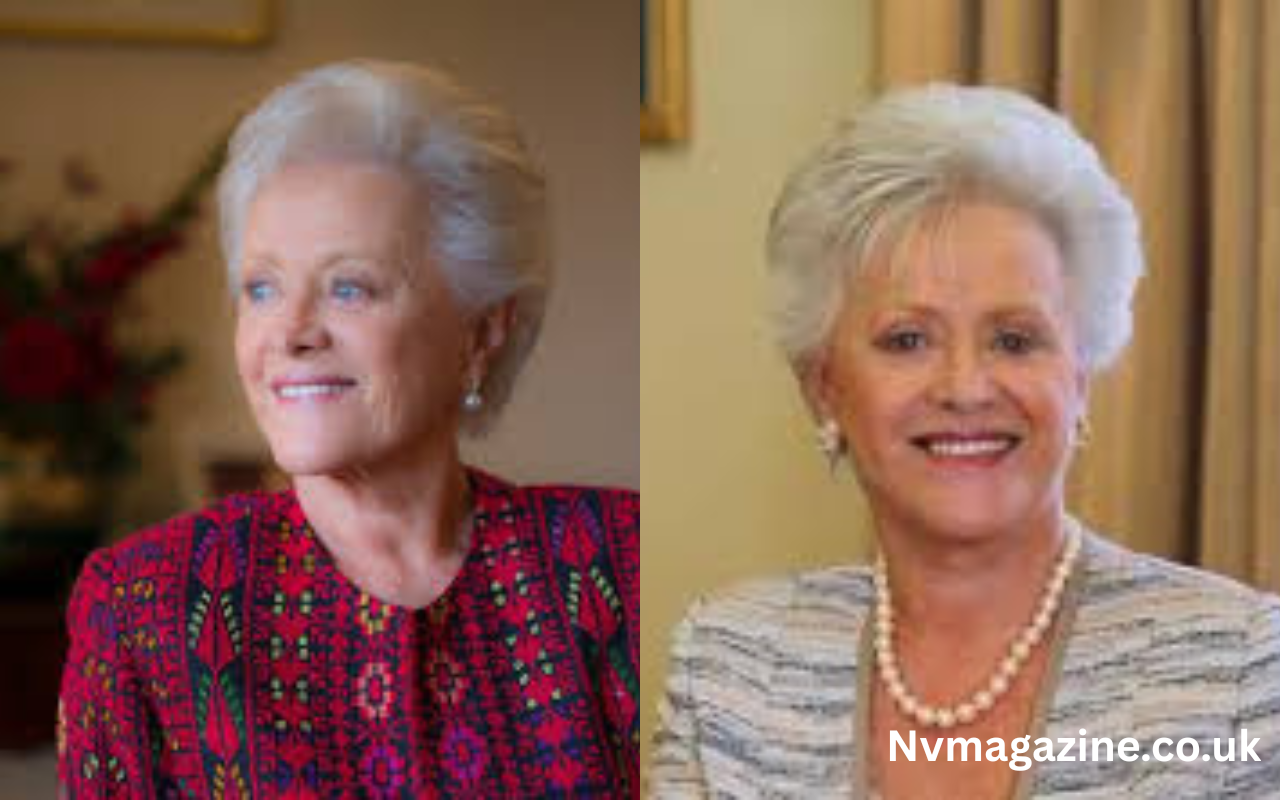
There are few lives that bridge cultures, continents, and generations as seamlessly as Princess Muna Al-Hussein. Born in a quiet English village and later becoming part of the Jordanian royal family, her story is not just about royalty—it is about transformation, resilience, and meaningful service. She is widely known as the mother of King Abdullah II, but her own contributions to healthcare and society have created a legacy that stands strong on its own.
Table of Contents
ToggleWhat makes her story truly compelling is the depth of her journey. From her early days as Antoinette Gardiner to becoming Princess Muna, she navigated cultural transitions, personal challenges, and public responsibilities with grace. Her life reflects not just royal privilege, but a commitment to improving lives, particularly through healthcare and nursing.
Quick Facts About Princess Muna Al-Hussein
| Attribute | Details |
|---|---|
| Full Name | Muna Al-Hussein (born Antoinette Avril Gardiner) |
| Date of Birth | April 25, 1941 |
| Age | 85 years (as of 2026) |
| Birthplace | Chelmondiston, Suffolk, England |
| Nationality | British-born, later associated with Jordan |
| Profession | Royal figure, healthcare advocate |
| Father | Walter Percy Gardiner |
| Mother | Doris Elizabeth Sutton |
| Spouse | King Hussein (m. 1961 – div. 1972) |
| Children | King Abdullah II, Prince Faisal, Princess Aisha, Princess Zein |
| Known For | Nursing advocacy, royal service |
| Net Worth | Estimated $1–5 million (unofficial) |
| Residence | Amman, Jordan |
| Social Media | Not publicly active |
Early Life and Cultural Roots
Princess Muna Al-Hussein was born as Antoinette Avril Gardiner on April 25, 1941, in Chelmondiston, Suffolk, England. She grew up in a disciplined military household, where her father served as a British Army officer. This environment instilled in her a sense of structure, resilience, and adaptability from a very young age.
Her childhood was far from ordinary, as her father’s military career required frequent relocations. She spent parts of her early life in different countries, which exposed her to diverse cultures and perspectives. This international upbringing played a major role in shaping her open-minded personality and ability to adapt to new environments with ease.
Education also played a central role in her development. She attended Bourne School in Kuala Lumpur, where she excelled academically and socially. Known for her athletic abilities, she was an A-grade field hockey player, demonstrating discipline and teamwork early in life.
A Life-Changing Royal Love Story
The turning point in her life came when she met King Hussein, one of the most influential leaders in Jordan’s history. Their meeting reportedly took place during the filming of Lawrence of Arabia, where she worked as a secretarial assistant.
Their connection quickly grew into a meaningful relationship. Within a year, they married in 1961, and Antoinette Gardiner became Princess Muna Al-Hussein. This transition marked a profound change—not only in her personal life but also in her identity and responsibilities.
Despite marrying a king, she was never officially titled queen, largely due to political considerations surrounding her foreign background. However, she embraced her role with humility, focusing on family life and contributing positively to Jordanian society rather than seeking formal titles.
Family Life and Motherhood
Princess Muna’s role as a mother is one of the most defining aspects of her life. She gave birth to four children, including King Abdullah II, who would later become the King of Jordan in 1999.
Her children include:
- King Abdullah II
- Prince Faisal
- Princess Aisha
- Princess Zein
After her divorce from King Hussein in 1972, she retained custody of her children and raised them with dedication and care. This period required strength and resilience, as she balanced motherhood with her responsibilities as a royal figure.
Her influence is often reflected in the leadership qualities of her children, particularly King Abdullah II. Her nurturing approach, combined with strong values, helped shape a future monarch known for diplomacy and modernization.
Contributions to Healthcare and Nursing
One of Princess Muna Al-Hussein’s most impactful contributions has been her work in healthcare. Rather than limiting herself to ceremonial duties, she became a leading advocate for nursing and medical education in Jordan.
In 1962, she founded the Princess Muna College of Nursing, an institution dedicated to training skilled healthcare professionals. This initiative played a crucial role in strengthening Jordan’s healthcare system and improving the quality of medical services.
Her efforts extend beyond education. She established scholarship programs to support aspiring nurses and has been actively involved in global health initiatives. She also serves as a patron for nursing and midwifery in the Eastern Mediterranean region under the World Health Organization.
Her contributions can be summarized as:
- Founding nursing education institutions
- Supporting scholarships for healthcare students
- Promoting global healthcare awareness
Personal Life, Character, and Values
Princess Muna is widely respected for her quiet and dignified personality. Unlike many public figures, she has maintained a low-profile lifestyle, focusing on meaningful work rather than public attention.
She continues to live in Jordan, where she remains deeply connected to the country and its people. Even after her divorce, she maintained a respectful relationship with the royal family, reflecting her maturity and grace.
Her character is defined by:
- Humility and simplicity
- Strong commitment to service
- Cultural adaptability
These qualities have made her a beloved figure not only within Jordan but also internationally.
Net Worth and Financial Overview
Princess Muna Al-Hussein’s financial details are largely private, but estimates suggest her net worth ranges between $1 million and $5 million. This modest figure reflects her understated lifestyle and focus on service rather than wealth accumulation.
Her income sources include royal settlements, institutional affiliations, and long-standing privileges associated with her royal status. However, she is not known for extravagant spending or public displays of wealth.
What stands out most is her approach to resources—she has consistently used her influence to support education and healthcare initiatives, demonstrating a commitment to social impact rather than personal gain.
Recent Activities and Ongoing Work
Even in her later years, Princess Muna remains active in healthcare advocacy. She continues to participate in international conferences, promote nursing education, and support global health initiatives.
Her involvement with organizations such as the World Health Organization highlights her enduring relevance in the field. She has also been vocal about the importance of supporting healthcare workers, especially during global challenges like the COVID-19 pandemic.
Recent highlights include:
- Participation in global health forums
- Advocacy for nursing workforce development
- Continued leadership in Jordanian healthcare initiatives
Legacy, Influence, and Global Impact
Princess Muna Al-Hussein’s legacy is deeply rooted in service and transformation. She has played a vital role in shaping Jordan’s healthcare system and has inspired generations to pursue careers in nursing and medicine.
Her life story represents the power of adaptability. Moving from England to Jordan, she embraced a completely new culture and turned her position into a platform for meaningful change.
Her impact extends beyond borders, as her work with international organizations continues to influence healthcare systems worldwide. She stands as a symbol of how dedication and compassion can create lasting change.
Conclusion
The life of Princess Muna Al-Hussein is a powerful narrative of resilience, transformation, and purpose. From her early days in England to her influential role in Jordan, she has lived a life defined not by titles, but by meaningful contributions to society.
Her journey teaches us that true legacy is built through service, compassion, and perseverance. She did not simply become part of history—she helped shape it through her dedication to healthcare and education.
As Princess Muna Al-Hussein continues to inspire generations, her story stands as a reminder that resilience, humility, and purpose can create a legacy that reaches far beyond borders and time.
