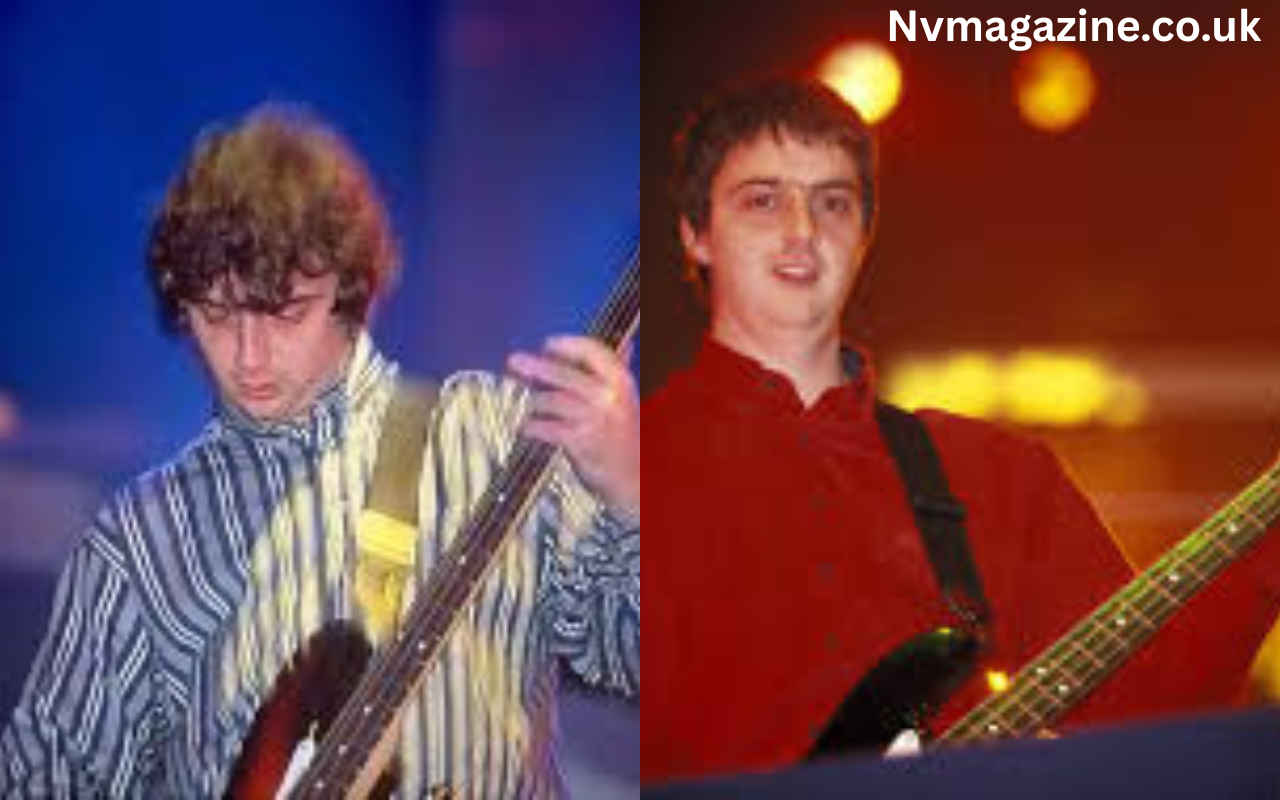
Introduction
When people think of Oasis, the first names that usually come to mind are Liam Gallagher and Noel Gallagher. Their personalities, headlines, and unforgettable rivalry often dominated the spotlight. But behind the swagger, the stadium tours, and the Britpop revolution stood a quieter figure whose contribution was just as important in the band’s earliest and most defining years—Paul “Guigsy” McGuigan.
Table of Contents
ToggleKnown simply as Guigsy, Paul McGuigan was the original bassist and one of the founding members of Oasis. He was never the loudest voice in the room, nor did he seek the fame that came with global success. Instead, he became known for his calm personality, dry humor, and grounded presence inside one of the most explosive bands of the 1990s. His role may have been quieter, but it was absolutely essential.
His story is not about chasing celebrity status. It is about loyalty, friendship, music, and knowing when enough is enough. From Manchester’s local music scene to becoming part of one of Britain’s greatest bands, and then choosing privacy over fame, Guigsy’s life reflects a rare kind of authenticity in the world of rock and roll.
Quick Facts About Paul “Guigsy” McGuigan
| Full Name | Paul McGuigan |
|---|---|
| Nickname | Guigsy / Guigs |
| Date of Birth | 9 May 1971 |
| Age | 54 years old (as of 2026) |
| Birthplace | Manchester, England |
| Nationality | British |
| Profession | Retired Musician, Former Bassist |
| Famous For | Founding member and original bassist of Oasis |
| Genre | Britpop, Alternative Rock |
| Instruments | Bass Guitar |
| Years Active | 1991–2002 |
| Spouse | Ruth McGuigan |
| Children | One son (Patrick) |
| Parents | Not publicly disclosed |
| Siblings | Not widely documented |
| Net Worth | Estimated $5–10 million |
| Football Club Support | Manchester City FC |
| Social Media | No major public accounts |
Paul McGuigan was born on 9 May 1971 in Manchester and became best known as the original bassist and co-founder of Oasis. He grew up in Levenshulme and attended Burnage High School, where many important friendships began.
Early Life and Manchester Background
Paul McGuigan was born and raised in Manchester, England, a city famous for its football culture, working-class identity, and powerful music scene. Growing up in Levenshulme, he was surrounded by the kind of energy that shaped many future musicians of his generation. Manchester in the 1980s was loud, ambitious, and full of local talent trying to break through.
He came from Irish Protestant roots and developed a personality that was straightforward, loyal, and deeply connected to his roots. Unlike many future stars who dreamed of fame early in life, Guigsy was more interested in everyday life—football, music, and friendships. That ordinary honesty later became one of the things fans appreciated most about him.
He attended Burnage High School, where his path crossed with people who would later help change British music history. The city itself became a major influence on his identity. Manchester was not just where he lived—it became part of who he was, and that same spirit would later define the sound and attitude of Oasis.
Before Oasis: The Rain and the Formation of a Band
Before Oasis became a household name, there was a smaller local band called The Rain. In the late 1980s, Guigsy formed the group with Paul “Bonehead” Arthurs, Tony McCarroll, and singer Chris Hutton. At that stage, they were simply a young Manchester band trying to find their sound and direction.
When Chris Hutton left the band, Guigsy invited his school friend Liam Gallagher to join as vocalist. Liam brought a completely different energy and attitude. He later suggested changing the band’s name to Oasis, inspired by the Oasis Leisure Centre mentioned on an Inspiral Carpets tour poster. That small decision would eventually become legendary.
Soon after, Liam’s older brother Noel Gallagher joined the group. Noel arrived with stronger songs, bigger ambition, and clear conditions—he would lead the songwriting and creative direction. This was the true turning point. The Rain was no longer just another local band. Oasis had officially begun.
Rise to Fame with Oasis
The early 1990s changed everything. Oasis quickly built a reputation for powerful live performances, confidence, and songs that connected with working-class youth across Britain. Their debut album, Definitely Maybe (1994), became one of the most important British rock albums of its era and helped launch the Britpop movement into the mainstream.
Guigsy played bass during this defining period, helping shape the band’s early sound. While Noel handled much of the songwriting and Liam became the public face of the band, Guigsy remained a steady part of the group’s foundation. His bass playing was simple, direct, and effective—exactly what the songs needed. Producer Owen Morris later helped dismiss rumors that Noel played all the bass parts, confirming Guigsy’s real contribution.
Then came (What’s the Story) Morning Glory? (1995), the album that turned Oasis into global superstars. Songs like “Wonderwall,” “Don’t Look Back in Anger,” and “Champagne Supernova” made the band internationally famous. During this time, Guigsy was part of one of the biggest rock acts in the world, even if he personally never seemed comfortable with the attention.
Life During the Peak of Britpop Fame
As Oasis became the face of Britpop, life inside the band grew more intense. Constant touring, interviews, media pressure, and public expectations created a chaotic environment. While some members thrived in that spotlight, Guigsy found it increasingly exhausting. His naturally private personality did not fit easily with nonstop fame.
In 1995, after returning from Japan during the Morning Glory tour, he temporarily left the band due to nervous exhaustion. He later described the experience honestly, saying that both his body and mind were overwhelmed. For a brief time, bassist Scott McLeod replaced him, but McLeod also left quickly, which showed just how difficult life inside Oasis had become.
Guigsy eventually returned before major London performances at Earl’s Court, but the experience revealed how much pressure he was carrying. Even during the band’s greatest success, he was already questioning whether that life truly suited him.
Personality, Interests, and Private Nature
One of the reasons fans remember Guigsy so fondly is because he never tried to be something he was not. He disliked interviews, avoided unnecessary publicity, and preferred staying out of the spotlight. In an industry full of ego and image-building, that honesty made him stand out.
He was famously obsessed with football, especially his lifelong support for Manchester City FC. In a well-known interview, he joked that his hobbies were watching football, reading about football, talking about football, and watching videos about football. That simple answer became one of the most memorable descriptions of his personality.
He also loved cricket, Doctor Who, and living a low-key life away from celebrity culture. Noel Gallagher once joked that football, cricket, and Doctor Who ranked above being in Oasis on Guigsy’s list of priorities. That humor captured exactly who he was—someone who never let fame become his identity.
Marriage, Family, and Personal Priorities
In 1997, Guigsy married his wife Ruth, and later that same year, their son Patrick was born. Fatherhood changed his priorities in a major way. Suddenly, the constant touring and chaos of being in Oasis no longer felt as important as creating stability for his family.
Many people close to the band believed that family life played a huge role in his decision to eventually leave. While the world saw Oasis as a dream life, Guigsy saw the personal cost behind it. He wanted peace, normality, and the chance to be present for the people who mattered most.
This decision reflected his personality perfectly. He was never driven by celebrity culture or endless ambition. He cared more about real life than rock-star mythology, and becoming a husband and father only made that clearer.
Why Paul “Guigsy” McGuigan Left Oasis
In 1999, Guigsy officially left Oasis, shortly after fellow founding member Paul “Bonehead” Arthurs also departed. Their exits marked the end of the original lineup and changed the identity of the band forever. For many longtime fans, this felt like the end of the pure original Oasis era.
Reports at the time suggested that the decision came from exhaustion, frustration, and a desire to focus on family life. Noel Gallagher later revealed that Guigsy resigned by fax and then avoided follow-up phone calls. It was not a dramatic public breakup—it was simply a quiet but final decision from someone who had reached his limit.
He was replaced by Andy Bell, but Guigsy remained closely tied to the band’s most beloved years. His departure was not about failure—it was about choosing the life he actually wanted over the one the world expected him to continue.
Net Worth and Sources of Income
Paul “Guigsy” McGuigan’s estimated net worth is generally believed to be between $5 million and $10 million. Since he has remained private for decades, exact numbers are difficult to confirm, but most of his financial success comes from his years with Oasis and the long-lasting value of those early records.
Albums like Definitely Maybe and (What’s the Story) Morning Glory? continue to generate royalties through streaming, licensing, and sales. Being part of one of the most successful British bands of all time means those early years created lasting financial security, even after stepping away from the industry.
He also co-wrote the football book The Greatest Footballer You Never Saw with journalist Paolo Hewitt, focused on footballer Robin Friday. Interestingly, Guigsy once said the book was not about making money—it was simply a story he believed should be told. That attitude reflects how he viewed wealth in general: useful, but never the main goal.
Social Media Presence and Public Image
In today’s world, it is unusual for a famous musician to have almost no visible social media presence. Guigsy does not maintain major public Instagram, Twitter/X, or LinkedIn accounts, and that choice feels completely consistent with the person fans have always known.
He declined to appear in the 2004 Definitely Maybe DVD documentary and also chose not to appear in the 2016 documentary Oasis: Supersonic, although archive footage and written contributions were used. He explained that he simply disliked interviews and publicity.
Rather than building a personal brand online, he chose silence and distance. For many fans, that made him even more respected. His privacy never felt like mystery for marketing—it felt genuine. He stepped away because that was honestly what he wanted.
Recent Updates and Legacy Today
Even in recent years, Guigsy remains one of the most private former members of Oasis. Public appearances are rare, and he has stayed largely removed from the music industry. In 2024, reports of him being seen in North London attracted attention simply because fans had not seen much of him for so long.
In 2026, his name returned to headlines when former Oasis members, including Paul McGuigan, were properly included in the Rock & Roll Hall of Fame recognition connected to the band’s induction. This reminded fans that although he stepped away long ago, his place in Oasis history remains permanent.
He may not appear on stage or in interviews, but his legacy continues through the music. Every conversation about the true beginnings of Oasis includes Guigsy, because founding members do more than play instruments—they shape identity, trust, and the emotional core of a band.
Conclusion
Paul “Guigsy” McGuigan’s journey proves that success does not always mean staying in the spotlight forever. As the original bassist and co-founder of Oasis, he helped build one of the most important rock bands of the 1990s, yet he never allowed fame to define his life.
From Manchester rehearsal rooms to global stadium tours, and then back to quiet family life, his path reflects honesty, humility, and independence. He understood something many people learn too late—that peace and purpose matter more than applause.
As Paul “Guigsy” McGuigan continues to inspire fans through the music he helped create, his story stands as a reminder that resilience, self-awareness, and authenticity can shape a meaningful legacy. Sometimes the strongest legacy is not built by the loudest voice, but by the person who quietly helped make history.
